Your Airline Credit Card Is Quietly Failing You After the Bonus Posts
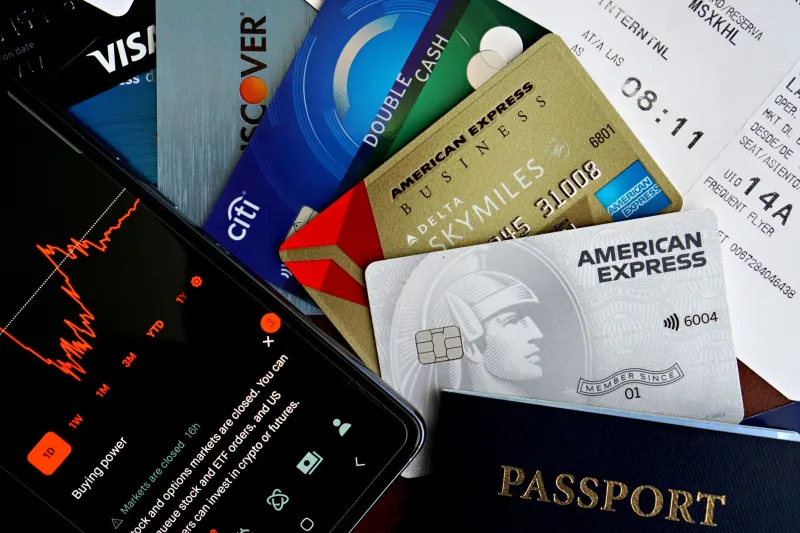
Let's be honest about how most people approach airline credit cards. They spot a deal — 60,000 bonus miles after spending $3,000 in the first three months — and they're sold. They apply, they spend, the miles drop into their account, and they feel like they beat the system.
And for that one shining moment, maybe they did.
But here's the thing nobody talks about: the sign-up bonus is the appetizer. What happens over the next two, three, or five years of card ownership is where most travelers either quietly build a war chest of free travel — or slowly bleed money through annual fees and missed earning opportunities they didn't even know existed.
If you've got an airline credit card sitting in your wallet right now, there's a decent chance it's underperforming. Here's how to actually run the numbers.
The Annual Fee Math Nobody Does
Airline credit cards range from no annual fee to $695 a year. That range alone should tell you something: these products are not created equal, and neither are the travelers who should be carrying them.
The standard pitch for a premium airline card goes something like this: "The $450 annual fee pays for itself with the companion certificate alone." And sometimes that's true — if you actually use the companion certificate, fly that specific airline regularly, and book far enough in advance to find saver-level availability.
But how many people actually do all three of those things consistently? Fewer than the marketing department would like you to think.
Before you renew any airline card, do this one calculation: add up every benefit you used in the past 12 months and assign a real dollar value to each one. Not the value the card issuer advertises — the value you would have paid anyway. A $100 airline fee credit only counts if you were going to spend $100 on fees regardless. A lounge access benefit only counts if you actually visited the lounge.
If that number doesn't clear the annual fee by at least 20%, you're paying for the privilege of holding the card.
Category Bonuses: The Earning Gap Most People Ignore
Here's where a lot of airline card strategies quietly fall apart. Most co-branded airline cards give you 2x or 3x miles on purchases with that specific airline — and a flat 1x on everything else.
That structure made sense when people were booking flights constantly. It makes a lot less sense if you only fly that airline twice a year.
Meanwhile, a general travel rewards card might earn you 3x on dining, 3x on groceries, and 2x on all other travel. If you're spending $800 a month on food and everyday purchases, the math on a category-optimized card can absolutely demolish what a co-branded airline card earns on the same spend.
The question isn't just which card earns the most miles on flights — it's which card earns the most value on how I actually spend money every month. Those are two very different questions, and most airline card holders have never asked the second one.
Transfer Partners Change Everything
One of the most underused levers in any points strategy is the transfer partner network. Some airline cards lock your miles inside a single program. Others — particularly those connected to larger bank reward ecosystems like Chase Ultimate Rewards, Amex Membership Rewards, or Citi ThankYou Points — let you move points to a menu of airline and hotel partners.
That flexibility matters more than most people realize. Why? Because award availability is wildly uneven across programs. You might find a business class seat to Europe for 57,500 miles through one partner when the same seat costs 115,000 through another. If your miles are trapped in a single program with bad availability on your target route, you're stuck.
A card that earns slightly fewer points but connects to six transfer partners can be worth dramatically more than a card with a higher earn rate and no flexibility. Always check where your points can actually go before you commit to a card — or before you decide to keep one.
Redemption Sweet Spots: Where Miles Actually Have Value
Not all miles are worth the same amount. This is one of those travel truths that sounds obvious but plays out in ways that genuinely surprise people.
A domestic economy redemption on a major carrier might get you half a cent per mile. A business class redemption on an international partner route through the same program might get you four or five cents per mile. That's a 10x difference in value from the same currency, depending on how you use it.
The practical implication: if your travel is mostly short domestic hops, a cashback card might genuinely outperform an airline card for your specific situation. Miles earn their keep on premium cabin international redemptions and on routes where cash prices are high. If neither of those describes how you fly, you may be optimizing the wrong thing entirely.
Before committing to any airline card strategy, map out where you actually want to go in the next two years. Then check award availability and redemption rates for those routes in the programs you're considering. It's a 20-minute exercise that can save you from two years of misaligned earning.
Building a Framework That Actually Works
Here's a simple way to evaluate your current card (or any card you're considering):
Step 1 — Calculate your true annual cost. Annual fee minus the dollar value of benefits you realistically use. This is your baseline cost of ownership.
Step 2 — Estimate your annual earning. Look at your actual monthly spending by category. Apply the card's earn rates. Convert points to dollars using a conservative valuation (0.8 to 1.2 cents per point for most programs is reasonable for economy redemptions; go higher if you're targeting business class).
Step 3 — Compare against alternatives. Run the same spending through a competitor card or a flat-rate cashback card. The delta tells you what your current card is actually worth — or costing you.
Step 4 — Check your redemption path. Do you have a realistic plan to use the miles you're earning? Miles sitting in an account for years lose value to devaluations. A plan doesn't have to be rigid, but it should exist.
If Step 2 minus Step 1 beats Step 3, you've got a card worth keeping. If it doesn't, you're paying for something that isn't working.
The Bottom Line
Airline credit cards can be genuinely powerful tools for cutting your travel costs — but only if you treat them like tools instead of trophies. The sign-up bonus gets the headlines, but the long game is where real savings stack up or quietly disappear.
Run the numbers on your own card at least once a year. Check whether the annual fee still makes sense. Look at whether your earning is actually aligned with your spending. And always, always have a redemption plan before the miles pile up.
Free flights don't come from grabbing bonuses and hoping for the best. They come from building a strategy that keeps working long after that welcome offer expires.