When the Route You Booked Just Vanishes: How to Survive an Airline's Quiet Schedule Purge
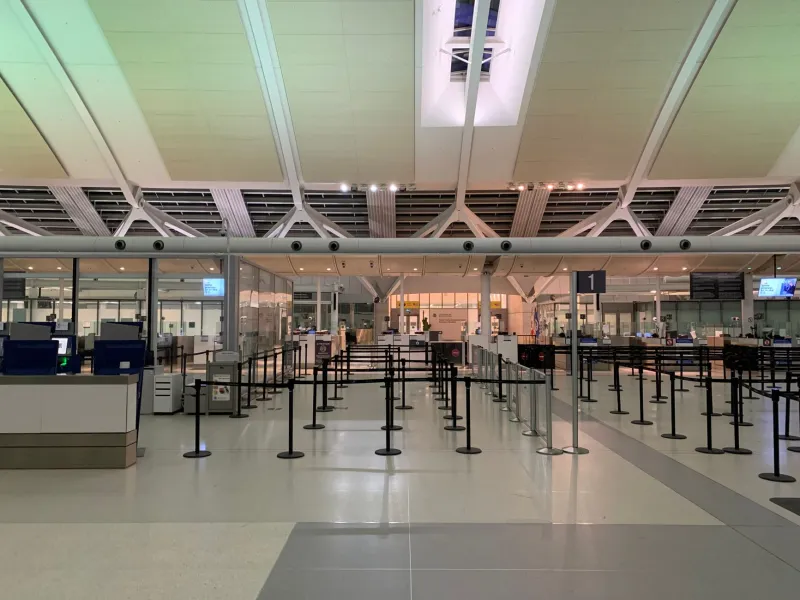
You found a great fare. You booked it months out. You told your boss you'd be out of the office, maybe even put down a hotel deposit. Then, somewhere between your booking confirmation and your departure date, the airline quietly pulled the plug on the entire route.
No fanfare. Minimal notice. Just a form email — if you're lucky — and a suddenly empty calendar slot where your trip used to be.
This isn't rare. Airlines discontinue routes constantly, and the passengers holding tickets are almost always the last to know. Understanding why it happens, which flights are most at risk, and what you can do about it is one of the more underrated skills in budget travel.
Why Airlines Cut Routes in the First Place
Airlines aren't sentimental. Every route on a network gets evaluated on a rolling basis — load factors, revenue per seat mile, competition from other carriers, fuel costs, and seasonal demand all feed into the math. When a route stops penciling out, it goes.
The triggers are pretty consistent:
Thin seasonal demand. A lot of leisure routes — think beach destinations, ski towns, and regional holiday corridors — only make financial sense during specific windows. A carrier might run a route from Chicago to a Florida beach market every winter, then quietly drop it once the warm-weather crowd stops booking.
New competition. When a low-cost carrier enters a market and starts undercutting fares, the legacy airlines sometimes exit rather than fight. If a budget carrier launches service between two cities you're flying, your existing carrier might decide it's not worth the price war.
Aircraft reallocation. Airlines move planes around based on where they can generate the most revenue. A route that seemed viable six months ago might get deprioritized when a more profitable opportunity opens up elsewhere in the network.
Slot and gate constraints. At congested airports, gates and takeoff slots are finite. If a carrier picks up a more lucrative route, something else has to give.
The Routes Most Likely to Disappear
Not all flights carry the same discontinuation risk. If you're booking far in advance, it's worth knowing which categories of routes tend to be the most fragile.
Secondary market connections. Flights between smaller cities — particularly those not served by a hub — are perennial candidates for cuts. These routes often exist because of temporary demand spikes or competitive maneuvering, not sustained traffic.
New routes in their first year. Airlines frequently launch routes with promotional fanfare and then quietly drop them after a trial period. If a carrier just announced service between two cities in the last six to twelve months, that route hasn't proven itself yet.
Seasonal leisure routes. Any flight that exists primarily to serve a vacation market — Caribbean islands, mountain resort towns, summer lake destinations — is operating on a shorter leash than a business travel corridor.
Ultra-low-cost carrier routes generally. Budget carriers are aggressive about launching and pruning. They'll open ten routes knowing a few won't stick. That's great for competition but less great if you've booked one of the experiments.
Code-share heavy routes. If the flight showing up in search results is primarily operated by a partner airline rather than the carrier you're booking through, there's an added layer of complexity. Partnership arrangements change, and when they do, those routes can evaporate quickly.
How to Spot a Doomed Route Before You Book
You can't predict every cut, but you can stack the odds in your favor with a little pre-booking research.
Check the route's history. Tools like FlightAware and FlightConnections can show you whether a route has been operating consistently or if it's been started and stopped. A route with a spotty operational history is a yellow flag.
Look at load factors indirectly. If a route consistently shows wide-open availability even at peak travel times, that's often a sign demand isn't there. Airlines don't like flying half-empty planes for long.
Search for news around the route. A quick search for the two city pairs plus the airline name will sometimes surface industry coverage about a route's launch — and whether analysts considered it speculative.
Check how far out the airline is selling tickets. Most carriers open booking windows 11 months out. If you're trying to book eight months ahead and the airline isn't showing availability, that's worth a second look.
Avoid booking a brand-new route for a critical trip. If you absolutely cannot miss this travel — a wedding, a funeral, a major work event — stick with established routes that have years of consistent operation behind them.
What You're Actually Owed When a Route Gets Canceled
Here's where it gets important. US passenger rights around airline-initiated cancellations are more robust than a lot of travelers realize — but they're also more limited than they should be in some respects.
Full refund, no question. If an airline cancels your flight — whether it's a single departure or the entire route — you are entitled to a full cash refund to your original payment method. Not a voucher. Not a credit. Cash back. The DOT has been increasingly firm on this, particularly since enforcement actions following the pandemic. If an airline tries to push you toward a travel credit instead of a refund, you can push back and cite your right to a refund under DOT rules.
Rebooking on alternative itineraries. Airlines are generally obligated to rebook you on the next available flight to your destination, including on partner carriers, at no additional charge. If the only option adds significant time or connections, you can often negotiate for a better alternative — or take the refund and rebook elsewhere.
What you're NOT automatically owed. Unlike the EU's EC 261/2004 framework, US rules don't require airlines to pay fixed compensation for cancellations (as opposed to delays or involuntary bumps). If your route disappears and the airline gets you to your destination eventually, your financial exposure beyond the ticket price — hotels, meals, connecting travel — is largely yours to absorb unless the airline voluntarily covers it. Some do. Many don't.
Trip insurance fills the gap. This is exactly the scenario a good travel insurance policy is designed for. If a route cancellation triggers downstream costs — a missed connection, a non-refundable hotel, a car rental deposit — coverage kicks in. It's worth buying on any trip where the non-ticket costs are significant.
What to Do the Moment You Get That Email
Speed matters. When an airline sends a cancellation notice, a few things happen simultaneously: rebooking inventory on alternative flights gets claimed fast, customer service queues spike, and your window for the best options narrows.
Don't wait. Call immediately, or use the airline's app to explore rebooking options before the good seats are gone. Have a clear idea of what alternative routing you'd accept — a different departure airport, an extra connection, a day earlier or later — so you can make quick decisions.
If you'd rather just get your money back and start fresh, say so clearly and document the interaction. Refund requests sometimes get routed to voucher-pushers on the first pass. Be direct: you want a cash refund to your original payment method, per DOT policy.
Then head back to the search tools and find a replacement fare. Routes get killed. Deals on replacement flights still exist. That's the whole game — staying flexible enough to keep moving when the original plan falls apart.
The travelers who handle this best aren't the ones who never get caught by a route cancellation. They're the ones who already know what they're owed and move fast when it happens.