Airlines Are Selling Seats That Never Existed — Here's How to Catch It Before You're Left at the Gate
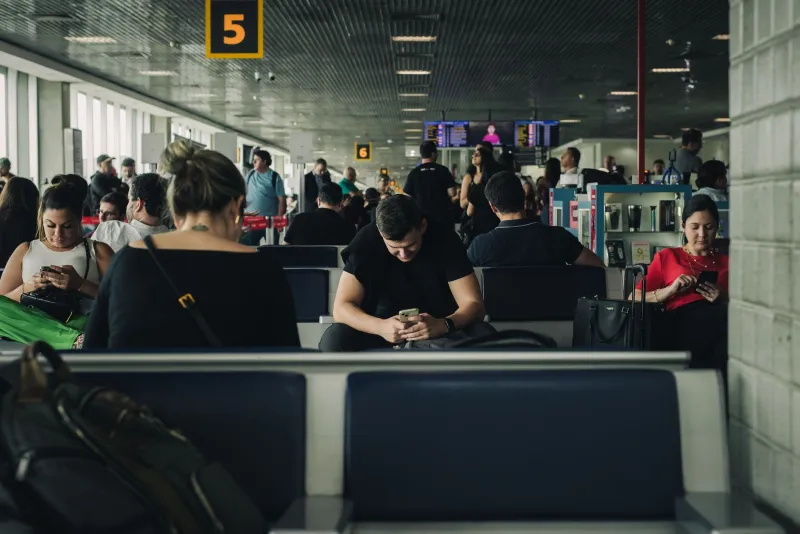
You booked a flight. You have a confirmation number. You even got the seat assignment email. And then you show up at the gate and find out the plane is full — and your name is on a list of passengers who are about to have a very bad afternoon.
This isn't a glitch. For a lot of carriers, it's a strategy.
Overselling flights is a legal, widespread practice across the US airline industry. But there's a version of it that goes beyond the standard no-show math — a more aggressive form where airlines knowingly sell inventory they have almost no chance of fully honoring. Call it phantom booking. Call it seat fabrication. Whatever you call it, knowing how it works is the first step toward making sure it doesn't ruin your trip.
How Airlines Justify Selling More Seats Than Exist
Here's the basic logic airlines use: on any given flight, a predictable percentage of passengers won't show up. Historically, that number hovers between 5% and 15% depending on the route, season, and fare class. So airlines build algorithms that calculate how many extra tickets they can sell without statistically running out of seats.
When the math works, nobody notices. Passengers board, the plane fills up, and the airline quietly pockets extra revenue from the no-shows who already paid non-refundable fares.
When the math doesn't work — when more people show up than expected — someone gets bumped. That's where you come in.
The problem is that some carriers, particularly during high-demand travel windows like holiday weekends or major events, push those algorithms past the point of reasonable risk. They're not just accounting for no-shows anymore. They're betting on them. And if the no-shows don't materialize, real passengers with real confirmed tickets get turned away.
The Data Patterns That Signal a Phantom-Sold Flight
You can't see an airline's internal inventory system. But you can read the signals it leaves behind — and once you know what to look for, they're surprisingly visible.
Seat maps that show full availability, then suddenly go dark. If you check a flight and see dozens of open seats, then check again 24 hours later and find almost everything blocked or "unavailable," that's not necessarily because passengers bought those seats. Airlines routinely hold back inventory and mark it as unavailable to manage overbooking risk. A flight that looks visually sold out on the seat map may still have active ticket sales happening in the background.
Fares that drop sharply within 72 hours of departure. Last-minute price cuts on a specific flight — not a general sale, but a targeted markdown on one route — can indicate the airline is trying to fill a gap left by anticipated no-shows. It can also mean they've already oversold and are hoping discount hunters snap up seats they'll then need to manage away from other confirmed passengers.
Multiple fare classes still open on a supposedly full flight. Tools like ExpertFlyer or even Google Flights' fare class filter can show you whether a flight still has inventory open in business or premium economy even when coach looks sold out. If a flight is truly at capacity, all fare buckets close. If some are still open, the airline is managing an oversell situation in real time.
Your seat assignment disappears after booking. This one is a clear red flag. If you booked with a seat assignment and it vanishes from your reservation without explanation, the airline has likely flagged your ticket as part of an oversold pool. You haven't been bumped yet — but you're in the queue.
How to Independently Verify What You're Actually Buying
Don't take the airline's booking confirmation at face value. Here's a practical verification routine worth running on any flight you care about:
Check the seat map on a third-party site. Don't just use the airline's own website. Pull up the same flight on SeatGuru or a competing booking platform. Discrepancies between what the airline shows and what third parties show can reveal inventory manipulation.
Call and ask directly. It sounds old-fashioned, but a quick call to the airline's customer service line — asking specifically whether your flight is currently oversold — can get you a straight answer. Agents aren't always forthcoming, but some will tell you if the flight is "at capacity" or flagged for potential involuntary rebooking. Ask for your record locator status and whether you have a confirmed seat assignment in the system.
Check in the moment it opens. Most airlines open online check-in 24 hours before departure. The passengers who check in first are least likely to get bumped. If you're flying on a route or during a period where overselling is common — think Thanksgiving week out of O'Hare, or any Friday afternoon out of LaGuardia — be at your keyboard the second that check-in window opens.
Watch load factor reports. Sites like FlightAware sometimes surface load data on popular routes. A flight showing 100%+ load factor before the day of departure is a mathematical signal that something unusual is happening with inventory.
What You're Actually Owed When a Phantom Seat Becomes Your Problem
Federal rules under the Department of Transportation's involuntary denied boarding regulations are more specific — and more valuable — than most travelers realize.
If you're involuntarily bumped from a domestic flight and the airline can get you to your destination within one to two hours of your original arrival time, you're entitled to 200% of your one-way fare, up to $775. If the delay stretches beyond two hours, that number jumps to 400% of your one-way fare, capped at $1,550.
Those are minimums, not maximums. And here's the leverage most passengers don't use: the airline wants to avoid paying cash. They'd much rather hand you a voucher. You don't have to take it. You can — and should — ask for the cash equivalent or a check. Vouchers expire, come loaded with restrictions, and often can't be combined with sale fares. Cash is cash.
Also worth knowing: the clock on that compensation calculation starts from your original scheduled arrival, not from when the airline decides to acknowledge the problem. Document everything — screenshot your original booking, note the exact time you were told you couldn't board, and get the agent's name if you can.
The Bigger Play: Using Oversell Knowledge to Book Smarter
Knowing which flights are likely to be oversold isn't just defensive — it's an opportunity.
If you have schedule flexibility, flying on a route with a history of overselling and volunteering to give up your seat can turn a routine trip into a windfall. Airlines will typically offer travel vouchers, meal vouchers, and hotel accommodations on top of the compensation above when soliciting volunteers. Volunteers are treated far better than involuntary bump victims — and you get to negotiate before you're in a desperate position.
For budget travelers especially, this is free money sitting on the table. A $400 travel voucher on a flight you paid $89 for is a remarkable return. The trick is knowing which flights are likely to need volunteers before you show up, and positioning yourself to be the first hand in the air when the gate agent makes the announcement.
The airlines have been running this math for decades. Now you have the same playbook. Use it.