How Budget Carriers Blew Up the Hub System — and Why That's Great News for Your Wallet
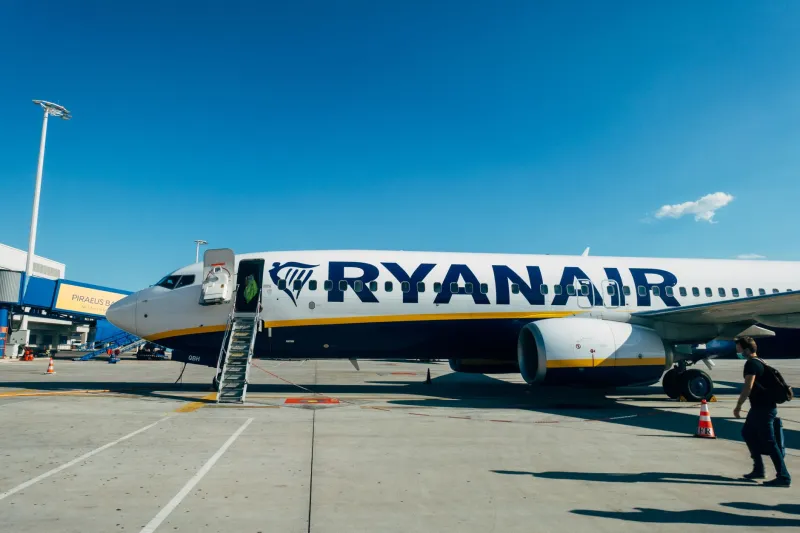
For decades, flying in America meant playing by the hub system's rules. You'd funnel through Atlanta, Chicago O'Hare, or Dallas/Fort Worth whether you liked it or not, paying whatever the dominant carrier decided your itinerary was worth. Then a handful of scrappy, low-cost airlines came along and basically set that playbook on fire.
The result? A quietly reshuffled route map that budget-conscious travelers are only beginning to take full advantage of.
What 'Point-to-Point' Actually Means for You
Traditional network airlines operate on a hub-and-spoke model. Think of it like a bicycle wheel — everything flows through a central hub, and passengers get routed accordingly, even when a direct path would make more geographic sense. It's efficient for airlines. It's not always efficient — or cheap — for you.
Point-to-point carriers like Southwest, Spirit, and Frontier operate differently. They connect city pairs directly, often bypassing the big hubs entirely. Southwest alone serves over 100 airports, with a heavy emphasis on secondary markets that legacy carriers have either abandoned or underserved for years.
The practical upshot: routes that once required a layover in Phoenix or Houston now sometimes run direct — and at prices that make the legacy carriers look embarrassing by comparison.
The Secondary Airport Effect Is Real
Here's where things get genuinely interesting for deal hunters. When a low-cost carrier moves into a smaller regional airport, it doesn't just add flights — it changes the entire pricing environment.
Take Southwest's expansion into airports like Hollywood Burbank (BUR), Providence (PVD), and Oakland (OAK). Each of these sits in the shadow of a larger, legacy-dominated hub. But because Southwest operates aggressively out of them, fares on nearby routes have dropped — sometimes dramatically — even on competing carriers that didn't want to lose market share.
Economists call this the "Southwest Effect," and it's been documented since the 1990s. When Southwest enters a market, average fares on that route can drop anywhere from 30% to 70%. What's newer is how this dynamic has extended to Spirit and Frontier's growing footprints — particularly in Sun Belt cities and mid-sized Midwest metros that major airlines treat as afterthoughts.
Cities like Cincinnati (CVG), Cleveland (CLE), and Kansas City (MCI) have seen meaningful fare compression in recent years, partly because ultra-low-cost carriers treated them as growth opportunities rather than secondary concerns.
The 'Wrong Hub' Trick Is Underrated
Here's a tactic that doesn't get nearly enough attention: flying into a different hub than your final destination — especially one served heavily by a budget carrier — and then using ground transportation or a short regional hop to close the gap.
Example: If you're heading to Washington D.C., you have three airport options. Dulles (IAD) and Reagan National (DCA) tend to attract legacy carrier pricing. But Baltimore/Washington (BWI) is a Southwest stronghold, and fares there routinely run $40 to $80 cheaper each way on comparable routes. Add a $20 MARC train ride into the city and you've still come out well ahead.
The same logic applies in other metro areas:
- New York area: Compare JFK and Newark (EWR) against Long Island MacArthur (ISP) or even Trenton-Mercer (TTN), which Frontier serves seasonally.
- Los Angeles: LAX versus Burbank, Long Beach (LGB), or Ontario (ONT) — Spirit and Southwest both operate at these alternates, and the savings can be real.
- Chicago: O'Hare versus Midway (MDW), which is essentially Southwest's home turf and often dramatically cheaper on popular leisure routes.
The key is doing the full math — not just the airfare, but the ground transportation cost and time. Sometimes the alternate airport makes zero sense. But when it does, the savings can be substantial enough to cover a hotel night.
Where Budget Carriers Have Created Entirely New Options
Beyond price compression, low-cost carriers have genuinely opened up destinations that were previously inaccessible without a painful connection.
Spirit and Frontier both operate routes connecting smaller metros to vacation destinations — Fort Lauderdale, Cancún, and Las Vegas — that simply didn't exist at affordable price points five years ago. Travelers in markets like Columbus, Ohio, or Raleigh-Durham can now catch nonstop or single-stop budget flights to Caribbean destinations that once required routing through Miami or New York at full legacy fares.
Frontier's aggressive expansion into Denver as a true hub (rather than just a United fortress) has also created meaningful options for mountain region travelers. Routes out of secondary Colorado cities and connections through Denver to leisure destinations have gotten cheaper and more frequent.
The Trade-Off You Need to Understand
None of this is free money, and it's worth being clear-eyed about the trade-offs.
Ultra-low-cost carriers strip the product down to the bone. Spirit and Frontier charge for carry-on bags, seat selection, and sometimes even printing your boarding pass at the airport. If you're not paying attention, those fees can erase the fare advantage entirely — which is exactly what we've covered before when it comes to decoding the true cost of a cheap fare.
Southwest is a different animal — no bag fees, no change fees, more transparent pricing — but its boarding system and lack of assigned seats isn't for everyone.
The play here isn't to blindly chase the lowest base fare. It's to understand why certain routes and airports are cheap, so you can make informed decisions about when the savings are real and when they're a mirage.
How to Use This When You're Actually Booking
A few practical moves that follow from all of this:
Search alternate airports deliberately. Most flight aggregators let you search by metro area rather than a single airport. Use that feature. The fare difference between airports in the same city can be startling.
Check Southwest separately. Southwest doesn't distribute its fares to Google Flights, Kayak, or most third-party aggregators. You have to go directly to Southwest.com to see their pricing. Budget travelers who skip this step are leaving real money on the table.
Watch for route launches. When a budget carrier announces service to a new city, introductory fares are often absurdly low — sometimes under $50 each way. Following airline announcements and fare alert services can put you at the front of the line for these.
Understand the ground connection math. Before dismissing an alternate airport as inconvenient, actually price out the transit. A $15 bus ride or $30 train ticket often makes the alternate airport the obvious winner.
The Bottom Line
The hub-and-spoke era isn't dead, but it's no longer the only game in town. Budget carriers have quietly redrawn the map of where Americans can fly affordably, and the travelers who understand that shift are the ones consistently finding deals that others miss.
The route you've always taken might not be the cheapest one anymore. It's worth checking.