Does Airline Bankruptcy Coverage Actually Pay Out? A Budget Traveler's Honest Guide to What's Worth Buying
When an airline goes under, it tends to happen fast. One day there's a press release about "restructuring," and the next, flights are grounded and travelers are scrambling. If you've got money tied up in future tickets, the question isn't whether you're worried — it's whether the insurance policy you bought (or skipped) is actually going to do anything about it.
The honest answer is more complicated than the insurance industry wants you to think.
What the Government Already Covers — For Free
Before you spend a dollar on any additional protection, it's worth knowing what you already have.
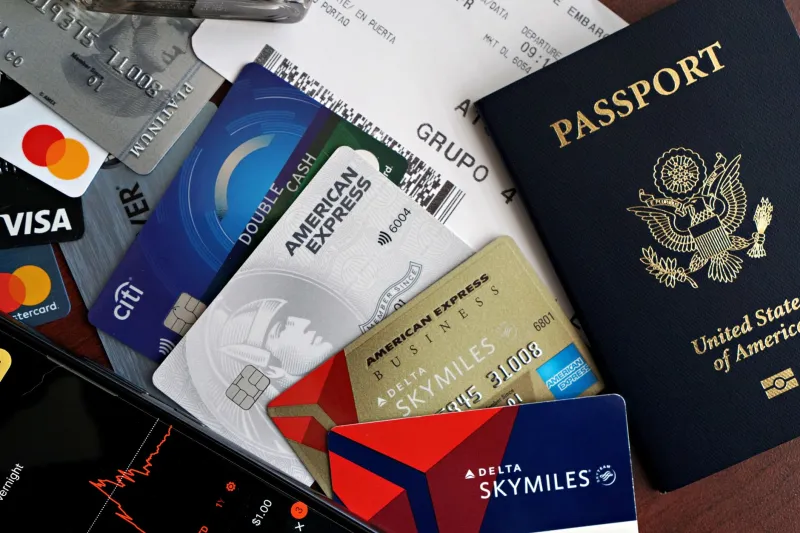
If you paid for your ticket with a credit card, you have a meaningful backstop: credit card purchase protection and chargeback rights. Under the Fair Credit Billing Act, if a merchant fails to deliver a service you paid for — which is exactly what happens when an airline goes bankrupt and cancels your flight — you can dispute the charge. Most major card issuers process these disputes within 30-60 days, and for recent purchases, your odds of recovery are solid.
The Department of Transportation also requires that airlines issue refunds for canceled flights, even in bankruptcy scenarios. The catch: once a carrier files Chapter 11 or Chapter 7, you become an unsecured creditor, and your refund claim joins a very long line. In practice, this process can take months or years, and you may recover cents on the dollar — if anything.
For domestic travel, there's no government-backed guarantee fund equivalent to what some European countries offer. The EU's EC 261/2004 regulation provides meaningful passenger protections for flights touching European airports, but American travelers on purely domestic routes are largely on their own once an airline's doors close.
What Travel Insurance Actually Says About Airline Failure
Here's where most travelers get surprised: standard travel insurance policies typically do not cover airline insolvency. Read the fine print on a basic trip cancellation policy and you'll usually find that "financial default of a travel supplier" is either excluded entirely or listed as a named peril that requires a specific add-on rider.
When insolvency coverage is available, it usually comes with conditions that significantly narrow what gets paid:
- Waiting periods. Many policies require that you purchase coverage within a set window after your initial trip deposit — often 14 to 21 days. Buy it later and the insolvency clause may be void.
- Exclusions for known risks. If an airline has already announced financial difficulties, filed for any form of bankruptcy protection, or been the subject of major news coverage about its finances before you buy the policy, most insurers will decline to cover that specific carrier. You can't insure a house that's already on fire.
- Coverage limits that don't match your actual loss. Policies cap payouts, sometimes well below what you paid for business or premium cabin tickets.
Providers like Allianz, Travel Guard, and Seven Corners each handle insolvency differently, and the definitions matter enormously. "Financial default" isn't always the same as "bankruptcy," and a carrier that suspends operations without formally filing may fall into a gray zone that delays or denies your claim.
The "CFAR" Option: More Flexible, More Expensive
Cancel for Any Reason (CFAR) policies are a different animal. They let you cancel a trip for literally any reason — including "I read that this airline is in financial trouble and I'm nervous" — and recoup a percentage of your prepaid costs, typically 50-75%.
For budget travelers, the math on CFAR often doesn't pencil out. These policies typically cost 40-60% more than standard coverage and only reimburse a portion of your loss. On a $400 domestic ticket, you might pay $80-$120 for CFAR and recover $200-$300 if you cancel. You've already spent money just to have the option, and you still take a loss if you use it.
Where CFAR starts making sense is on expensive international itineraries — think $2,000+ per person — booked months in advance on carriers that have shown any financial instability. The peace of mind has a real dollar value when the stakes are high.
Alternative Risk Mitigation That Costs You Nothing
Before reaching for your wallet, consider these strategies that budget travelers already use to reduce airline insolvency risk for free:
Fly closer to your departure date. The less time between booking and travel, the smaller your exposure window. An airline that's struggling financially is more likely to collapse over a six-month horizon than a two-week one.
Use a credit card with strong travel protections. Cards like the Chase Sapphire Preferred, Chase Sapphire Reserve, and certain Amex products include built-in trip cancellation and interruption coverage as a card benefit — no separate policy required. Check your card's benefits guide before buying standalone insurance.
Monitor the airline's financial health. Public signals like credit rating downgrades, major layoff announcements, missed debt payments, or grounded aircraft are all findable through basic news searches. If you see multiple red flags, consider whether to book at all.
Split payments when possible. If you're booking a multi-leg trip involving separate carriers, booking each leg independently means one airline's failure doesn't necessarily sink your entire itinerary.
When Paying for Coverage Actually Makes Sense
For most budget travelers flying domestic routes on major carriers, dedicated airline insolvency insurance is probably overkill. The combination of credit card protections and the DOT refund process — slow as it is — provides a reasonable safety net.
The calculus shifts when:
- You're booking international flights on smaller or regional carriers with thinner financial cushions
- You're traveling during a period when a specific airline has publicly disclosed financial difficulties
- You've prepaid a large amount — think premium cabin international tickets or complex multi-stop itineraries — and losing that money would genuinely hurt
- Your credit card offers no travel protections and you paid via debit or bank transfer
In those scenarios, look specifically for policies that list "financial default of airline" as a named covered peril, check the purchase timing requirements carefully, and compare the payout limits against your actual exposure.
The Bottom Line
Airline insolvency insurance is a real product that solves a real problem — but it's a narrower solution than the marketing suggests. For most travelers most of the time, your credit card and some basic financial awareness of the carrier you're flying will take you further than a policy with fine print that carves out exactly the scenario you're worried about.
Know what you already have before you buy what you probably don't need.